
In January 2026 the World Economic Forum announced that its Reskilling Revolution initiative had reached more than 850 million people, nearing its goal of giving a billion people better access to education, skills and economic opportunity by 2030. More than 25 technology companies pledged to support 120 million workers with AI access, skills training and career pathways1.
The announcement also stressed that alongside digital skills such as AI, big data and technology literacy, business leaders put heavy weight on human qualities: leadership, curiosity and resilience1.
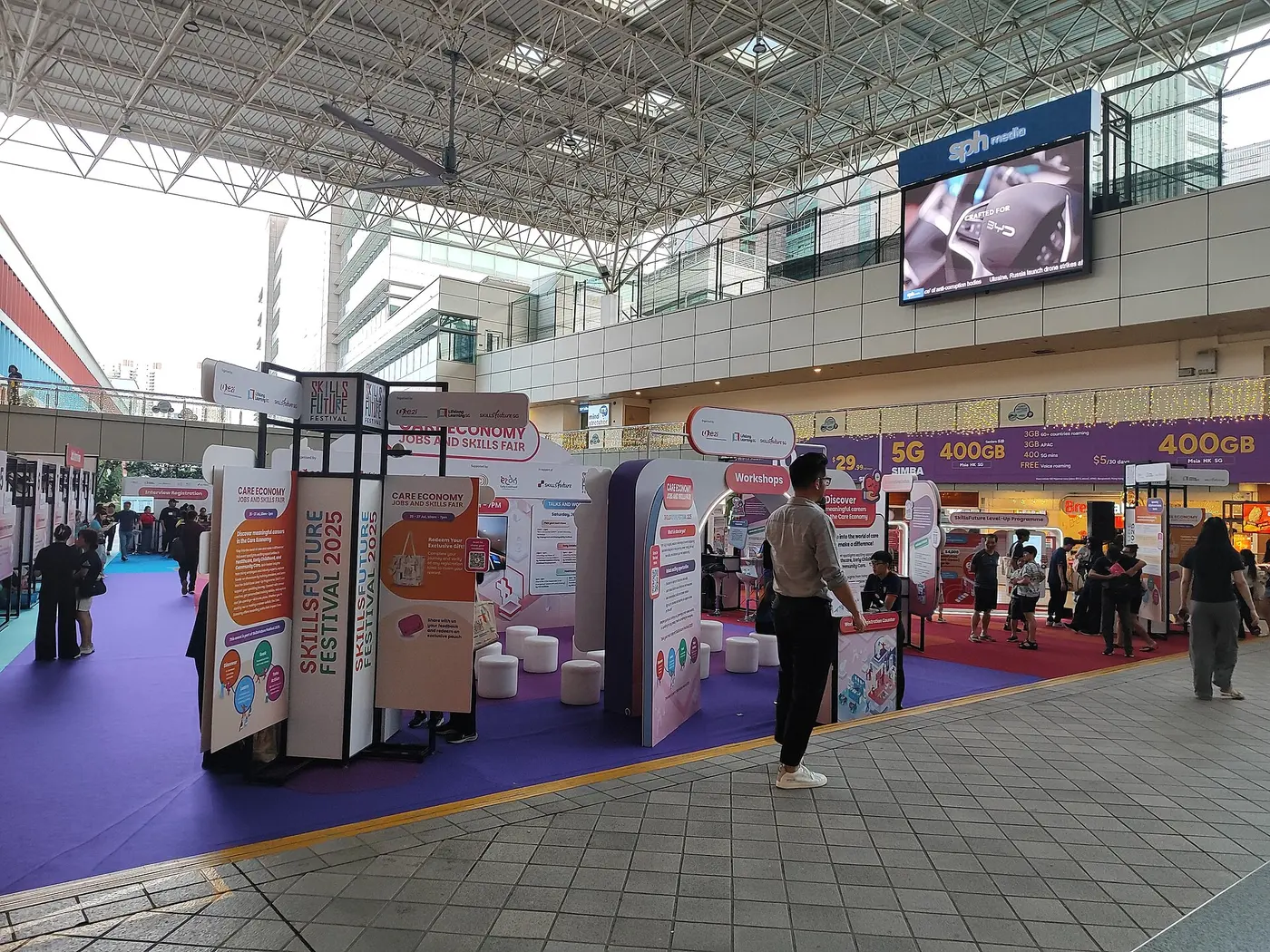
Eight hundred and fifty million is a very large number. But the key word is "reached". Having access to training and actually learning are different things, and nowhere shows the gap more clearly than Singapore.
A country that gives everyone money to learn
In 2016 Singapore launched SkillsFuture Credit: every citizen aged 25 and over received credit to pay for approved courses. The government has since added further rounds, including a one-off 500 Singapore dollar top-up from October 2020, valid until the end of 20252,3.
It is one of the most generous and well-designed lifelong learning policies in the world. No application, no means test; the money is already in the account.

In November 2025 Singapore's Ministry of Education had to answer questions from four MPs about an uncomfortable number. By the end of September 2025, only close to 800,000 people, about three in ten of those eligible, had used the 500-dollar top-up. Seven in ten were letting it expire2.
Why people had the money and did not learn
The ministry's answer is worth reading closely. The first reason was that many had already been sponsored by their employers, around 241,000 people in 2024 alone, so they did not need to use their own credit. The second was opportunity cost: adults have to take time away from work, family and personal commitments to study2.
The ministry also said it would not extend the deadline, because the top-up had been designed to nudge people into taking timely action2.
The wider picture is not bad. Adult training participation in Singapore rose from 35 percent in 2015 to around 50 percent in 2022, and annual SkillsFuture Credit users rose from 156,000 in 2019 to 192,000 in 20223. But even in a country doing nearly everything right, the biggest barrier to learning is still time, not money.
Lessons for Vietnamese employers
Plenty of Vietnamese companies end the year with training budget unspent, or with an online course library bought on subscription that very few employees ever open. Singapore's story suggests this is not simply a lack of appetite for learning. It is a sign the policy has stopped at granting access.
What Singapore is doing next is also worth noting. It is shifting from spreading money evenly to more targeted support at the career stages where learning matters most, such as the 4,000 Singapore dollar top-up reserved since 2024 for people aged 40 and over4. For a company, the equivalent is to stop splitting the budget per head and start tying learning to a specific role, skill and moment.
A small experiment in your own company
To find out whether your learning budget is being forgotten like Singapore's top-up, you do not need a big survey. A three-month experiment is enough.
Pick two departments of similar size and type. In the first, keep things as they are: a single announcement that employees have a learning fund or course library account. In the second, add three things: a clear expiry date, regular short reminders suggesting one specific course relevant to each person's job, and a fixed weekly learning slot agreed with the manager.
After three months, compare uptake between the two. If the gap is large, you have evidence that the barrier is how the benefit is delivered, not demand for learning. If the gap is small, the problem may be the content itself: courses not tied to what people need to do.