In July 2021 Vietnam's fourth COVID-19 wave swept into Ho Chi Minh City and the southern industrial provinces at unprecedented speed. Factories faced two options: close, or cut the production line off from the outside world. The second option had a short name, "three on-site": produce on site, eat on site, rest on site. A lighter alternative was "one route, two destinations", with workers shuttled only between their lodgings and the factory1.
In Ho Chi Minh City's export processing zones, industrial parks and high-tech park alone, 618 enterprises with 57,507 workers had registered for "three on-site" by 23 July. After inspection, 414 enterprises with 44,145 workers were approved1. In Dong Nai, more than 1,150 enterprises with about 136,000 workers registered for one of the two models2.
The first weeks
Epidemiologically, the model clearly worked. According to the Ministry of Industry and Trade, infections in the city's industrial parks fell from hundreds a day to around 30, and only 10 new cases were recorded on 20 and 21 July1.
But factories are not designed for people to live in. Garment and footwear firms, the most labour-intensive industries, said plainly that feeding and housing workers collectively was very difficult. Washing and sanitation facilities were not enough for hundreds of people living on site for weeks. The cost of meals, regular testing and protective supplies fell entirely on employers2.
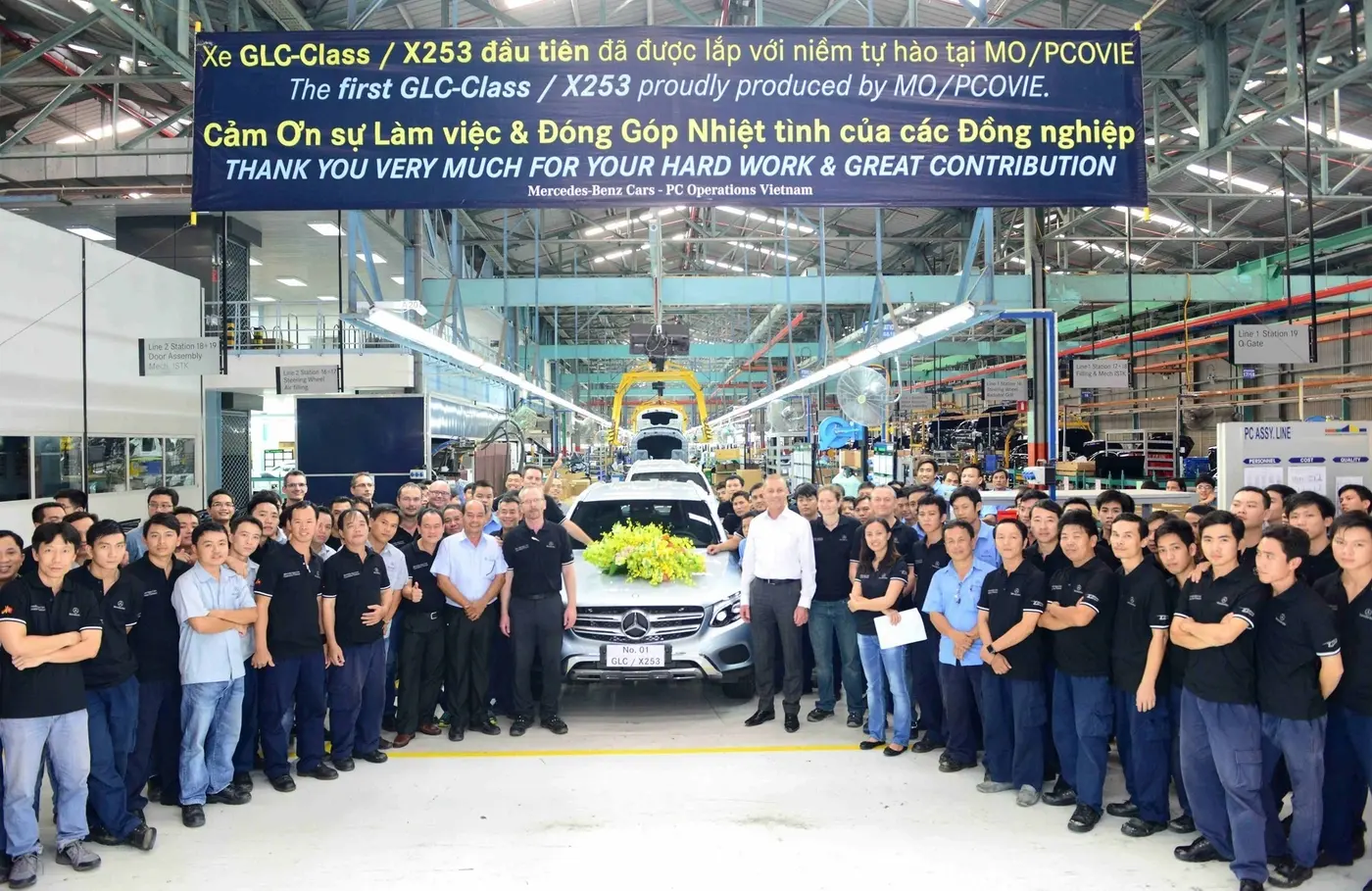
The hardest part was not on any cost sheet. According to VnEconomy, after about two weeks workers' morale began to waver: fear of infection while living in close quarters, strain from being confined to the factory grounds, worry about young children and parents back in rented rooms or home villages. Most garment and footwear workers are women, under double pressure from work and family. Dozens of "three on-site" enterprises still recorded infections2.
By early August, in Binh Duong, 204 industrial-park enterprises with 61,000 workers had asked to stop the "three on-site" model2.
The motorbike convoys home
Outside the factories, meanwhile, hundreds of thousands of workers had lost their income and were living in cramped boarding houses, where infection risk was highest. According to General Statistics Office figures cited by VnExpress, some 1.3 million workers left the big cities for their home provinces between 15 July and 15 September 20213.
In early October, as checkpoints eased, long convoys of motorbikes filled the highways. VnExpress told the story of a 31-year-old worker from Kien Giang who, after 13 years in Ho Chi Minh City, rode home with his pregnant wife and daughter, saying it was the first time he felt nothing tying him to the city. A young couple from Lao Cai travelled almost 2,000 km over three days and four nights from Binh Duong, some days eating only two packets of instant noodles3. Nghe An received around 87,000 people, Soc Trang 50,000, An Giang and Kien Giang about 40,000 each3.
When the city reopened
From late September, provinces began to lift restrictions, and employers discovered the next problem: there was nobody to do the work. Binh Duong alone expected a shortfall of 40,000 to 50,000 workers. Of 18 million workers across 19 southern provinces, fewer than a third had kept stable employment through the wave4. Deputy Labour Minister Nguyen Van Hoi explained the exodus as the result of prolonged pressure on living costs and morale in crowded boarding areas with high infection risk4.
Employers who wanted their people back had to do things that had rarely featured in HR plans: lay on transport to bring workers back from their home provinces, arrange accommodation, help with childcare and children's schooling, improve meals, set up hardship funds, and offer long-term incentives for loyal workers. At some firms, the company's own leaders had stayed on site alongside workers4. The Ho Chi Minh City Textile, Embroidery and Knitting Association dared to hope for only 70 to 80 percent of workers to return4.
What HR should keep from it
2021 exposed things that ordinary times rarely do. Most employers' HR records knew a worker's job title, pay grade and start date, but not where they lived, who they lived with, how old their children were or how far away home was. Those were exactly the details that decided who could stay and who had to leave when the crisis hit.
It also showed that retention is not only about pay. When a whole industrial zone is short of labour at once, people go back to the place they remember treating them decently at the hardest moment. That memory cannot be bought back with a bonus at reopening.