
If you have sat through a presentation on the future of work, you have probably seen this slide: by 2030, technology creates 170 million new jobs and displaces 92 million existing ones, a net gain of 78 million. The figures come from the World Economic Forum's Future of Jobs Report 20251. The presenter usually stops there with a reassured smile: machines create more work than they take.
The more memorable part sits in the skills section. According to the report, of every 100 workers worldwide, 59 will need reskilling or upskilling before 2030. Of those 59, 11 are unlikely to receive it, equivalent to more than 120 million people facing medium-term redundancy risk1.
The net figure hides the most important question: are the people losing work in one place the same people who get the new work in another? The answer depends almost entirely on who gets reskilled, and when.
A company that faced that question
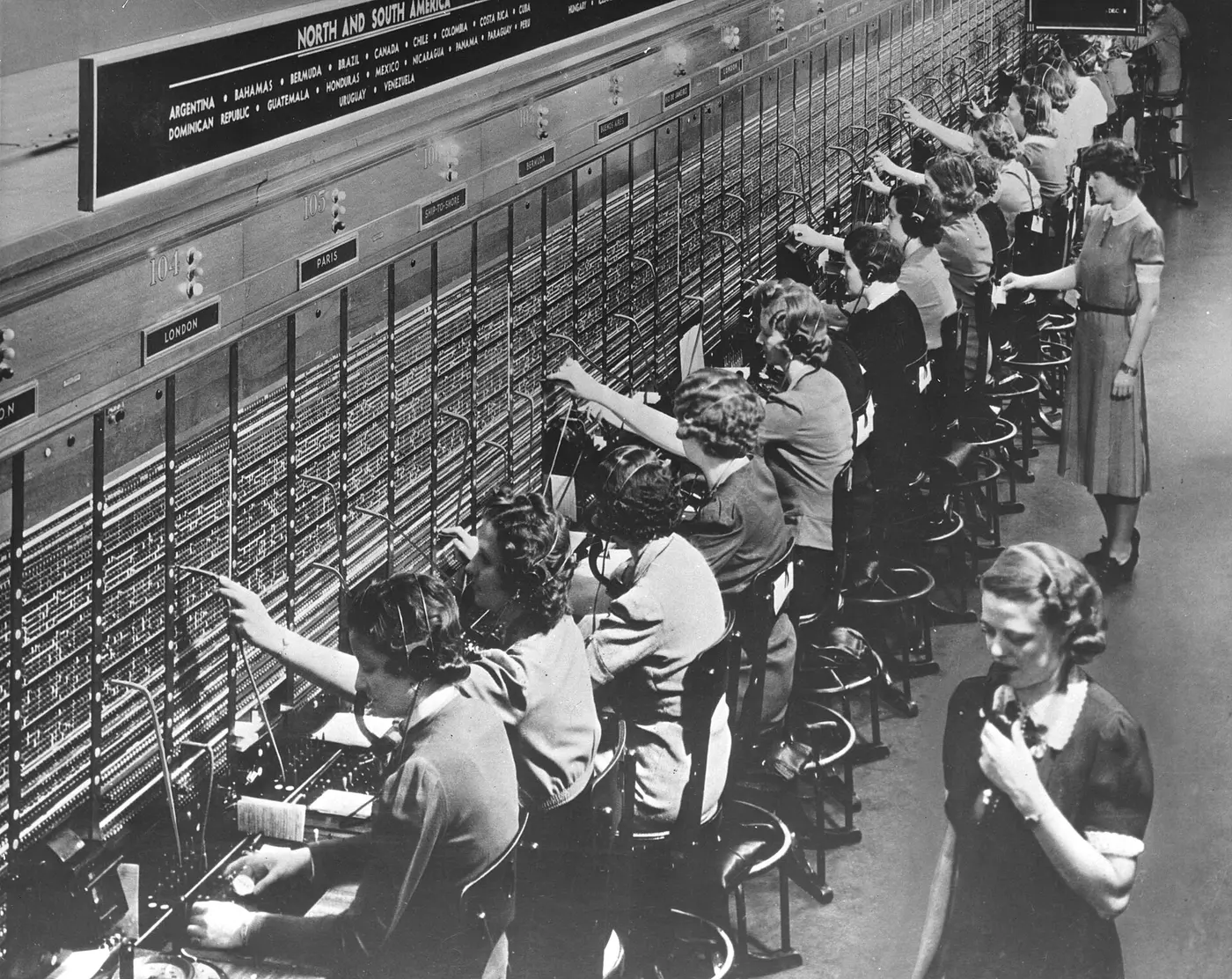
In 2013 AT&T's leadership did an uncomfortable sum. Around 100,000 of its employees were in hardware-related jobs: installing, maintaining and running cable and switching systems. Those jobs were unlikely to exist within a decade, as the network moved to software and the cloud2. Data traffic among AT&T customers had grown by 250,000 percent since the iPhone arrived in 20073.
The easy option was to shrink gradually and hire software engineers from outside. AT&T chose differently: a multiyear programme costing around a billion dollars, called Future Ready, to retrain nearly half its workforce for the jobs the company would need2.

The programme included online courses and partnerships with Coursera, Udacity and a number of universities. At its centre was an internal career portal where each employee could see which roles the company had, the skills they required, the salary range, and whether that job family was projected to grow or shrink in the years ahead2.
That last detail is the smartest part. AT&T did not just tell employees to study. It showed them the same forecast leadership was looking at, so each person could decide what to learn and where to go.
The hard part few write about
Future Ready was not a fairy tale. Reskilling on that scale asks a great deal of effort from employees, not everyone can or wants to make it, and it does not guarantee everyone keeps a job. What the company did achieve was to give those who wanted to move a concrete path, with information, tuition and a destination role, instead of leaving them to fend for themselves when the old job disappeared.
That is exactly the gap between the 59 and the 11 in the WEF report. Not everyone will be reskilled, but the share depends heavily on whether employers see the change coming and open a path.
How learning teams in Vietnam should use the report
If you use the WEF report in a presentation to leadership, use the pair 59 and 11, not the net 78 million. The net figure sounds reassuring but hides the part a learning function is responsible for: who will be reskilled, and who will not.
And borrow the question AT&T asked in 2013: which roles in our company might not exist in five years, and where will the people in them go?
Run the 59 and 11 for your own company
WEF's ratios are global, but they are a useful starting point for an estimate. A 500-person company applying them directly would have around 295 people needing reskilling or upskilling before 2030, and around 55 at risk of nobody training them.
The more useful question is: who are those 55? They are usually not poor performers. They are people doing a good job in a role that is about to change, with no time to study, not nominated by their managers for development programmes, and with nobody telling them how their work is shifting.
Finding this group early is something HR can do with data it already holds: put the list of high-risk roles next to each person's training history. Anyone in a high-risk role who has not joined a single programme in the past three years is in the 11.