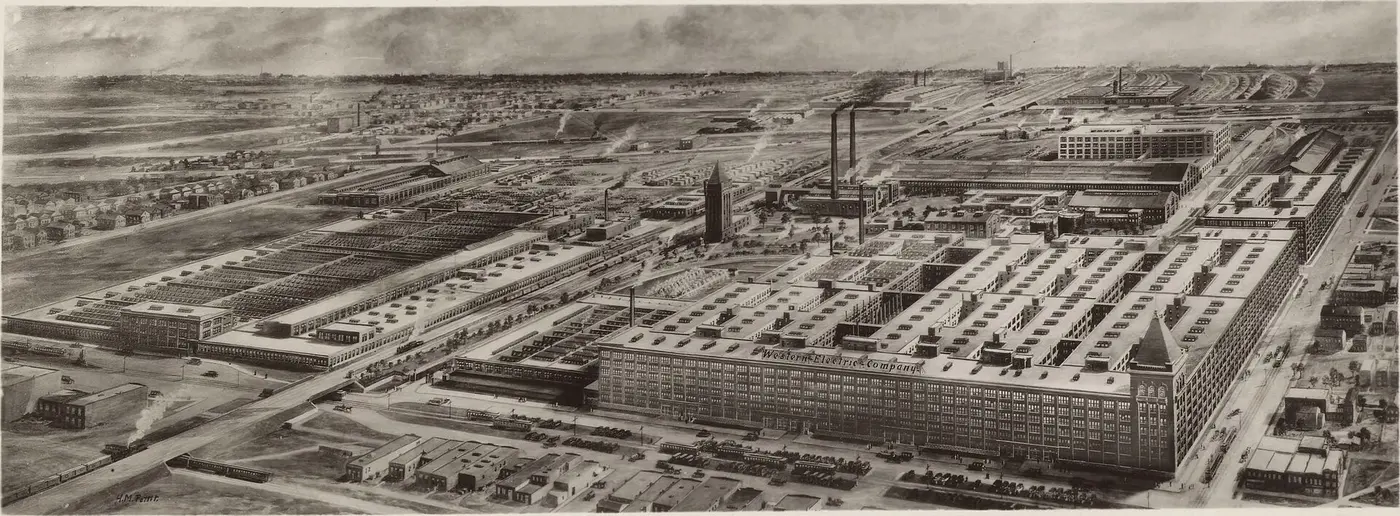
In 1913, Ford's employment office at Highland Park, Michigan, did something that looks in hindsight like an engine running with nothing attached. It hired 50,448 people in a year. The plant's average workforce at the time was 13,6232.
For every position on the line, the company was hiring almost four times a year. Economists would later call it a labour turnover rate of 370 percent. On any given day, around one worker in ten did not show up2.
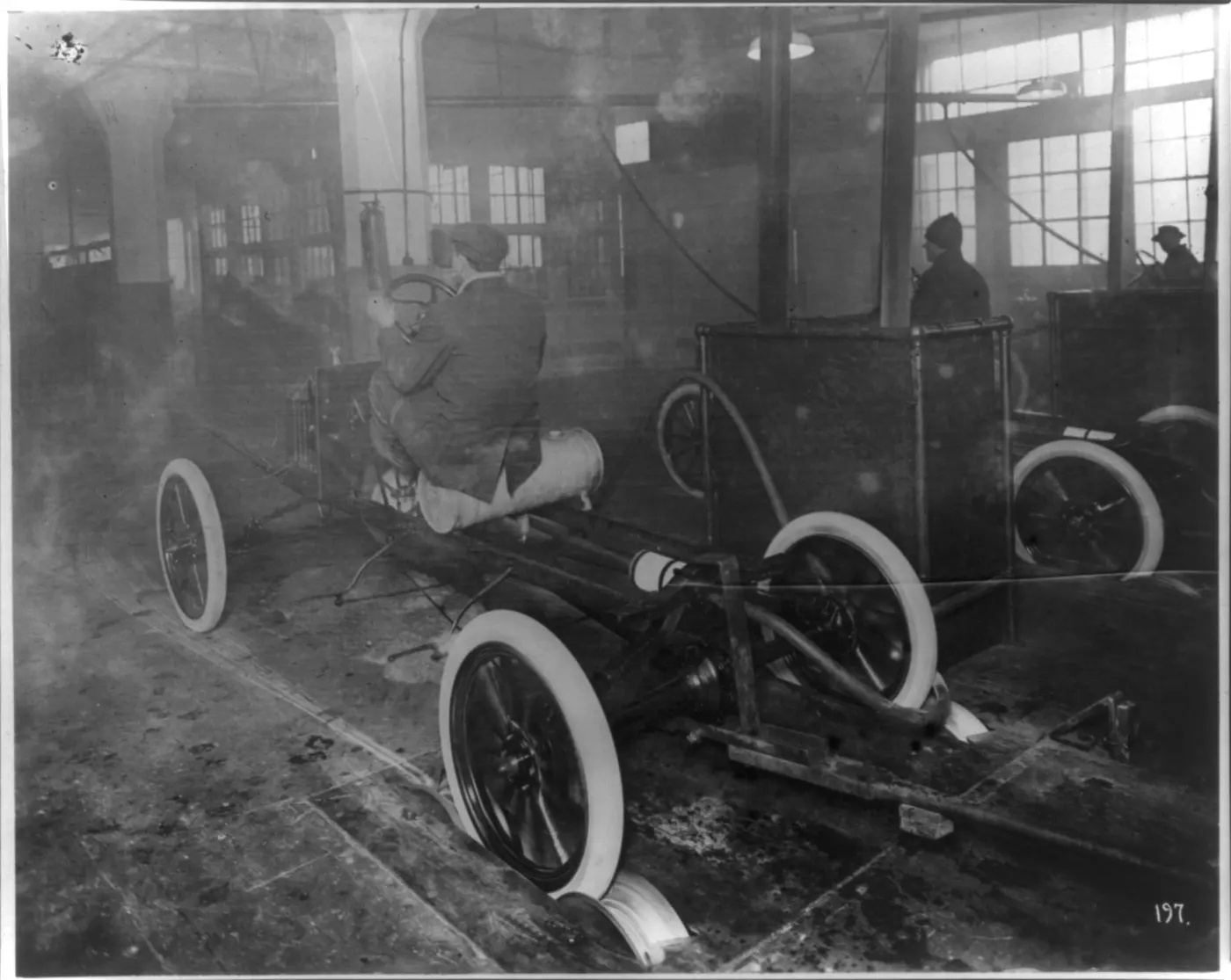
The irony is that this was Ford's greatest year as an engineering company. In October 1913 the moving assembly line ran for the first time at this very plant, cutting the time to build a Model T from twelve and a half hours to 93 minutes1. The machine had never run faster. Only the people would not stay.
Why people walked out
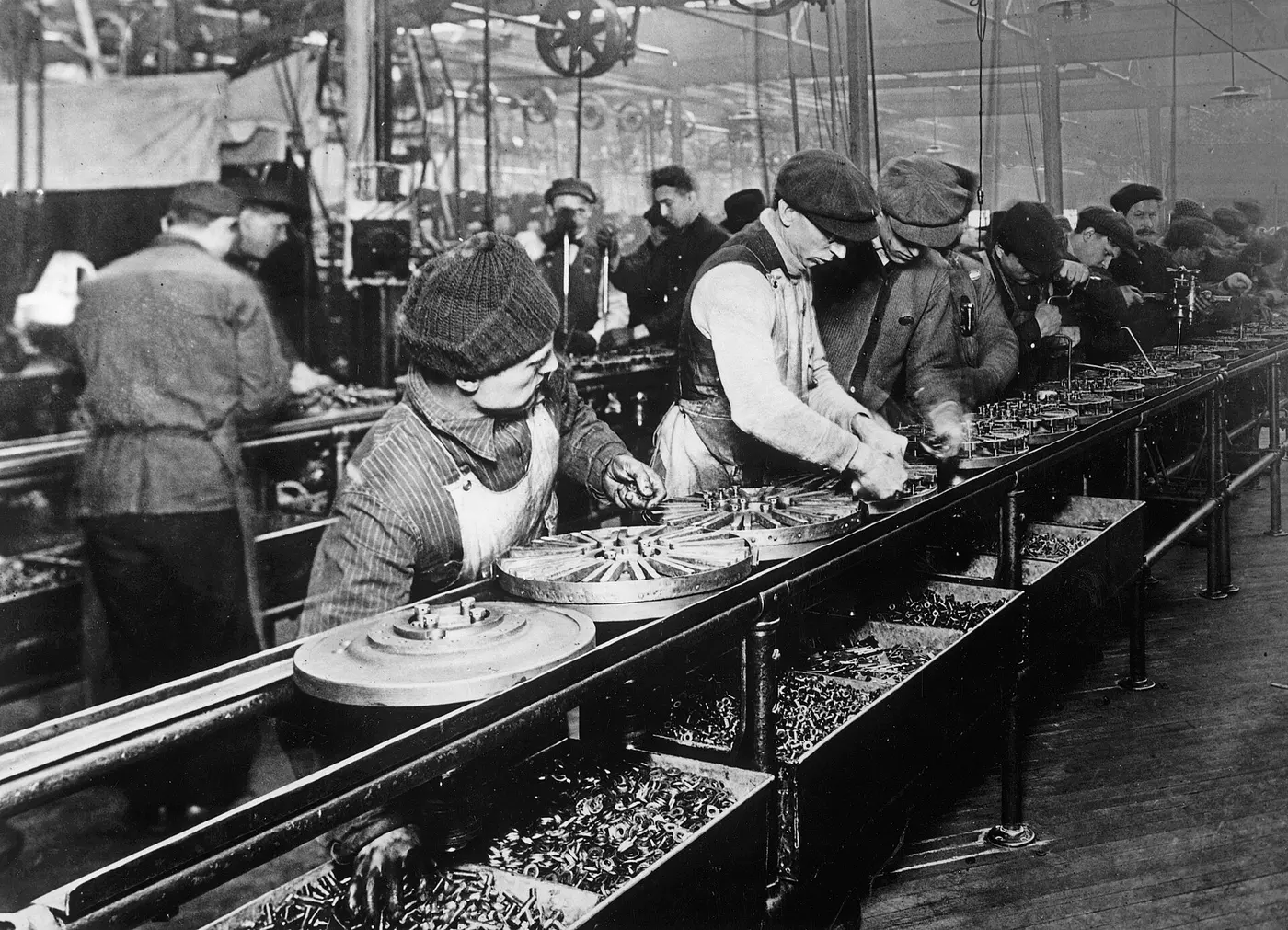
Before the line, a car worker was a craftsman who assembled a whole unit and knew what he had made. The line broke that job into motions repeated every few seconds. According to The Henry Ford museum, men who had taken pride in their skill quickly tired of standing in one spot turning the same bolt. They came in late, skipped days, and then left for good1.
Detroit had no shortage of work. A man who quit Ford on Monday morning could be at another shop by Tuesday afternoon. For Ford, every one of those departures meant another newcomer to train and another gap on a line that waited for nobody.
The announcement of 5 January 1914
On 5 January 1914 the company announced that from 12 January it would pay a minimum of five dollars for an eight-hour day. The old rate had been about $2.30 for nine hours1,3. The news crossed the country. Within days thousands of men arrived in Detroit, the crowd at the gates turned into a riot, and it was broken up with fire hoses in the January cold1. From then on Ford hired only people who had lived in Detroit for at least six months.
The results came fast. In their 1987 study, economists Daniel Raff and Lawrence Summers found turnover fell to 54 percent in 1914 and 16 percent in 1915, while the company's real profits kept rising2. They read it as strong evidence for efficiency wage theory: paying above the market can be cheaper, because it buys stability, effort and a queue of people wanting in.
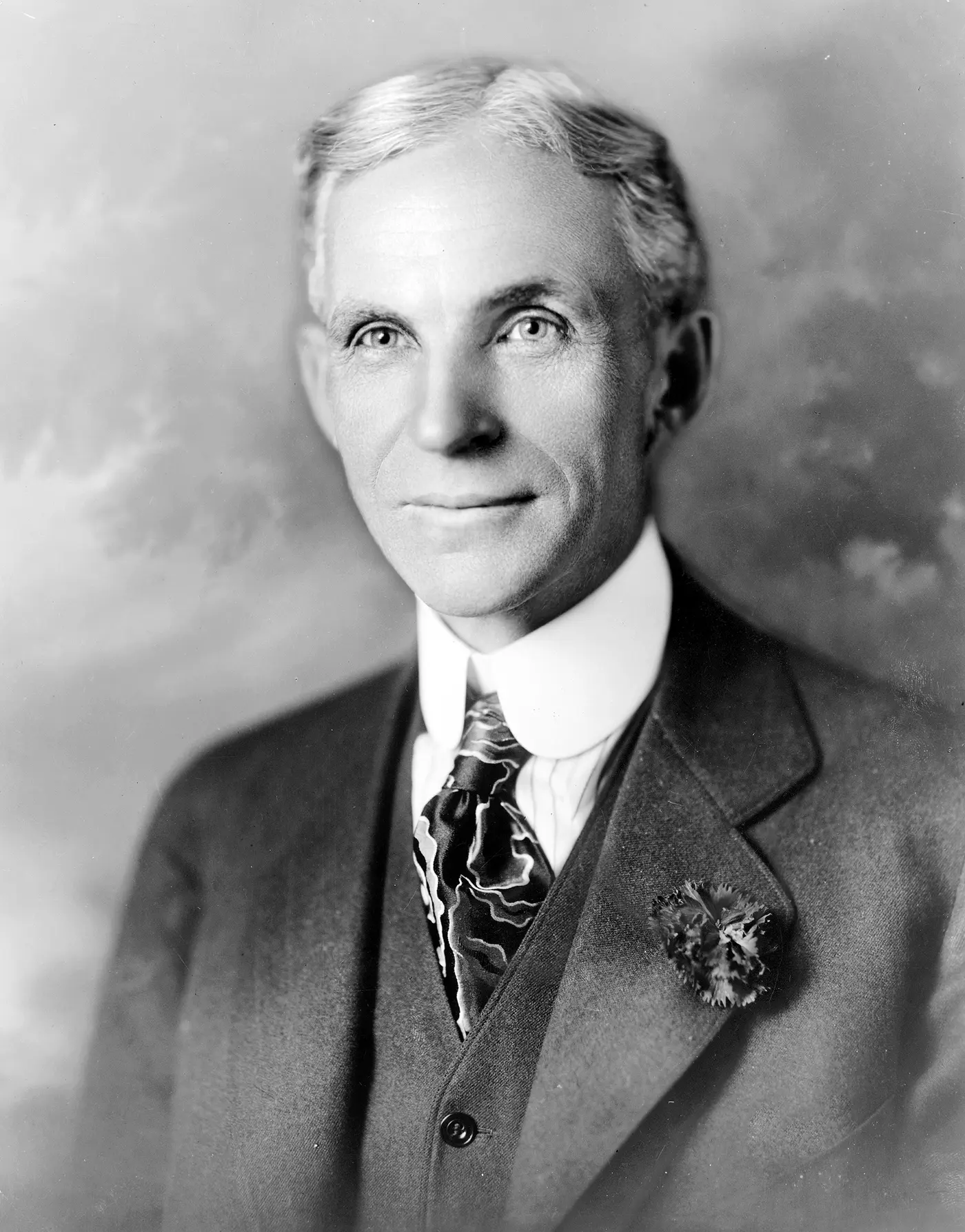
Henry Ford said as much himself in his 1922 memoir, calling the five-dollar day "one of the finest cost-cutting moves we ever made"3.
The part rarely told: five dollars was not all wages
The story usually stops there and skips the most important detail. Of the five dollars, the wage itself was only about 15 percent above the market rate. The rest was profit-sharing paid in advance, and it came with conditions3.
To qualify, a worker needed six months with the company and had to fall into one of three groups: married men living with and taking good care of their families; single men over 22 of proved thrifty habits; and young men under 22 or women who were the sole support of a relative3. Women outside that last group were simply left out.
Then there were standards at home. According to The Henry Ford, recipients had to avoid drink, avoid domestic violence, take in no boarders, keep a clean house and save regularly1. To check, the company set up a department of about fifty investigators, who visited workers in their homes3.
Ford recorded with some pride that 60 percent of workers qualified at first, 78 percent after six months and 87 percent after a year3. That can be read two ways. One: the scheme encouraged steadier lives. Two: in the first year, four workers in ten stood on the same line and took home far less, for reasons that had nothing to do with their work.
Seen today, this is an intrusion into private life that no HR function would be allowed to make. Ford did not simply raise pay. He paid a very high price to buy control. How much of the effect came from the money and how much from the strict screening is still argued over by researchers.
What an HR team can take from a story 112 years old
The lesson is not that paying more keeps people. Everyone knows that, and few have a budget to double wages. The lesson is how Ford looked at the 370 percent. The company did not treat it as a problem for recruiters to run faster at. It put a price on it: the cost of hiring, the cost of training newcomers, the output lost while the line ran short of experienced hands. Set against those numbers, doubling the wage became an investment that paid.
Factories in Vietnam's industrial provinces such as Binh Duong, Dong Nai and Bac Ninh face a strikingly similar problem. Work is broken into small repeated tasks, and the industrial park next door always has a hiring banner up. Plenty of them are still doing what Ford did in 1913, hiring non-stop to fill gaps, without anyone having priced the churn.